The Life Story of Baylie Phillips: Becoming Chronically Ill in Public, Surviving in Private
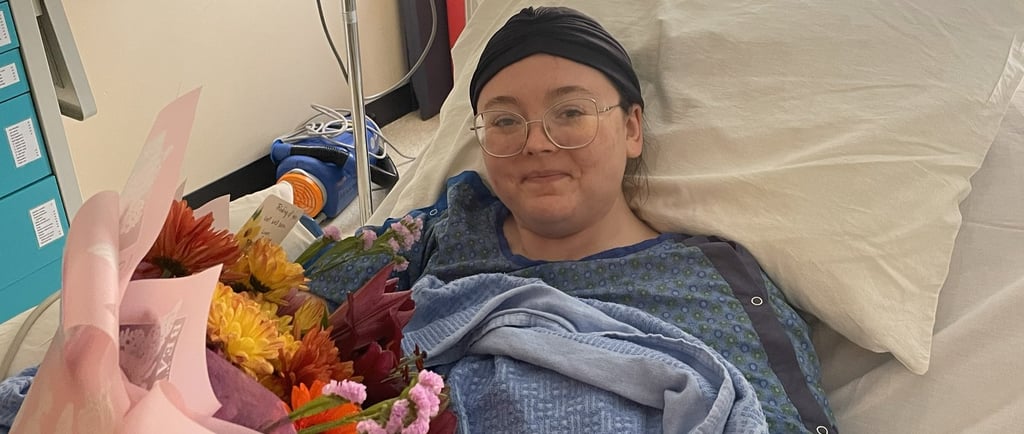
Baylie Phillips shares the beginning of her health journey—from early symptoms that were dismissed and normalized, to the first diagnoses that changed everything, to a life shaped by fourteen complex conditions, medical gaslighting, trauma, and near-death experiences. This post traces the long road to being believed, the hidden cost of surviving inside broken systems, and how writing, advocacy, and creation became a way to stay—leading to the birth of Rarely Ordinary Collection and the Hope in Stripes blog.
LIVED EXPERIENCES
Baylie Phillips
2/28/202630 min read
The Life Story of Baylie Phillips
Becoming Chronically Ill in Public, Surviving in Private
The Beginning of My Health Journey
I did not begin my life expecting to become fluent in the language of illness.
I expected the ordinary trajectory—the kind you’re taught to assume is universal. Education would lead to a career. A career would lead to stability. Relationships would deepen over time. Milestones would arrive more or less on schedule, perhaps with a few detours, but nothing that required reimagining the entire structure of a life.
I expected my body to be a background presence. Something that carried me forward, not something I had to negotiate with every morning.
Instead, my body rewrote the rules early and often.
Long before I had words like connective tissue disorder, autonomic dysfunction, or vascular compression, my body was already signaling that something was wrong. Pain arrived quietly at first—subtle enough to dismiss, persistent enough to linger. Fatigue followed, not the kind that sleep fixes, but the kind that settles into your bones and becomes a constant companion. There were moments of dizziness, strange aches, joints that felt unreliable, symptoms that didn’t fit neatly into any explanation offered.
Like many people, I learned to minimize it.
I told myself it was stress. Overwork. A pulled muscle. Being too busy. Being too sensitive. I learned to normalize discomfort because it was easier than questioning it—and because, at the time, no one else seemed particularly alarmed. When you are young, pain is often treated as temporary by default. When you are young and articulate, it is often reframed as anxiety.
I internalized that narrative without realizing it.
What I didn’t understand then was that my body was not malfunctioning suddenly—it had been compensating for years. Quietly. Until it couldn’t anymore.
The shift from “something feels off” to “something is very wrong” did not happen in a single dramatic moment. There was no clean before-and-after. There was only accumulation. Symptoms stacking on top of one another. Capacity shrinking in increments small enough to explain away—until one day, explanation no longer worked.
That was the beginning of becoming chronically ill in public.
Doctor’s appointments multiplied. Tests appeared on my calendar like punctuation marks in a sentence that never resolved. Imaging, labs, referrals—each one offering the promise of clarity, each one carrying the risk of dismissal. I learned quickly that being sick is not enough. You must also be believable. Calm, but not detached. Emotional, but not too emotional. Persistent, but not “difficult.”
I began rehearsing my pain before appointments. Editing myself in advance. Learning which symptoms to emphasize and which to soften so I wouldn’t be written off.
At the same time, I was learning to survive in private.
Outside of exam rooms, life continued. Classes. Responsibilities. Expectations. The world does not pause when your body starts to fail. Friends still plan. Deadlines still arrive. The future still demands answers. I learned how to hold myself together in public spaces and unravel quietly afterward—on bathroom floors, in parked cars, in the dark when the pain finally caught up to me.
This dual existence—functional enough to be expected to continue, sick enough to be drowning—became my baseline.
Diagnoses did not arrive all at once. They accumulated slowly, often reluctantly, sometimes only after something catastrophic forced recognition. Each new name brought a strange combination of relief and grief. Relief that I was not imagining this. Grief that what I was experiencing had no simple fix, no expiration date, no guarantee of improvement.
With each diagnosis, the story of my body changed. With each procedure, my nervous system learned new forms of fear. Being awake for interventions I wasn’t supposed to feel. Being told pain was “pressure.” Learning what it means to dissociate while conscious. Medical trauma does not require a single dramatic event—it grows through repetition, through being unheard while vulnerable, through the loss of bodily autonomy layered over and over again.
Over time, my nervous system adapted to survive, not to rest.
Near-death experiences recalibrated my sense of time entirely. When you come close enough to losing your life that it stops feeling theoretical, the future collapses into the present. Long-term plans lose their authority. What matters becomes smaller, sharper: breath, stability, presence. Survival is no longer abstract. It is immediate.
And still, something unexpected happened in the midst of all of this.
Creation emerged—not as ambition, but as necessity.
Writing became a way to metabolize what my body could not. Research became a way to reclaim agency in systems that had stripped it away. Building tools, language, and eventually community became a form of staying alive. Not in a metaphorical sense—in a very real one.
This story is not about a single illness, or even many illnesses.
It is about what happens when a body demands attention long before the world is ready to listen. About learning a new vocabulary while grieving the loss of an old life. About surviving in systems that require strength from people already depleted. About discovering that continuation itself can be an act of defiance.
This was not the life I planned.
But it is the life that shaped everything that followed.
Early Diagnoses and the First Losses
Long before I had language for connective tissue disorders, autonomic dysfunction, or vascular compression syndromes, my body was already signaling distress.
Pain arrived early—and it stayed.
It did not announce itself dramatically. It seeped in. A persistent ache in my lower back that never fully resolved. Stiffness that lingered longer than it should have. A sense that my body was lagging behind my intentions. Fatigue followed close behind—not the kind that comes from a long day or a poor night’s sleep, but a deep, systemic exhaustion that settled into my muscles and bones and never quite lifted.
At the time, I did what most people do when symptoms don’t yet have names: I normalized them.
I told myself it was stress. Overwork. Being young and pushing too hard. I stretched more. Slept when I could. Adjusted my posture. Took over-the-counter pain medication and waited for relief that never truly came. The symptoms were constant enough to be disruptive, but not yet dramatic enough to demand answers. And because the world around me did not yet see a reason to worry, I learned not to worry either.
Normalization became a survival skill.
What I didn’t understand then was that normalizing pain is not the same as being well—it is often the first step toward disappearing inside your own body. When discomfort is constant, it becomes background noise. You stop noticing how much space it takes up because you have never known anything else. You learn to work around it. To plan your life around the assumption that pain will be present, without questioning why.
The first true rupture came when ignoring it was no longer possible.
By 2020, the pain in my lower back had shifted from manageable to unmistakable. Sitting became unbearable. Standing was unreliable. Walking felt wrong—like something inside me was grinding, catching, resisting movement. The fatigue deepened. My body stopped responding the way it always had, and for the first time, I felt afraid of it.
The first major diagnosis arrived quietly: Bertolotti’s Syndrome.
I remember how surreal it felt to hear the name—how distant and clinical it sounded, how little it resembled the lived reality of the pain I was in. Bertolotti’s Syndrome is a congenital spinal condition, one in which an enlarged transverse process of the lowest lumbar vertebra partially or fully fuses with the sacrum. In my case, it meant my spine had developed an extra half-structure where it did not belong, altering biomechanics and irritating surrounding nerves.
It had always been there.
That fact landed harder than I expected.
Knowing it was congenital meant this wasn’t an injury. It wasn’t something I had done wrong. It wasn’t something that would heal with rest or time. It meant my spine itself was different—had always been different—and that the pain I was experiencing was not a temporary deviation from normal, but a revelation of something structural.
What changed was not my spine.
What changed was my ability to ignore it.
Suddenly, the pain had a name—and with it came the first real loss: the belief that my body would eventually return to baseline. The belief that there was a simple fix. The belief that this was just a phase.
Treatment attempts followed quickly. Diagnostic nerve blocks were presented as both confirmation and hope—a way to prove the pain generator and offer relief. I remember clinging to that possibility, believing that if the source could be identified, it could be resolved.
The relief lasted 26 seconds.
That moment—walking out of the pain clinic after the nerve block failed—marked something irreversible. It was the first time I understood, viscerally, that diagnosis does not always lead to solution. That naming the problem does not guarantee relief. That some conditions are not stepping stones back to normal, but thresholds you cross into a different kind of life.
Alongside the physical pain came the first quiet losses.
I began to lose trust in my body.
I began to lose spontaneity.
I began to lose the assumption that effort would be rewarded with progress.
Activities I had once done without thought now required calculation. Sitting through a class. Standing through a shift. Making it through the day without retreating into pain. My world began to shrink—not suddenly, but steadily, as my body demanded accommodations I didn’t yet know how to ask for.
Emotionally, the loss was harder to articulate.
I was still functioning. Still showing up. Still moving forward on paper. But internally, something had shifted. I began to sense that the life I had envisioned—effortless mobility, linear progress, predictable recovery—might not be available to me.
This was the first funeral I didn’t know I was attending.
There was no ceremony for the version of myself who trusted her body implicitly. No acknowledgment that something foundational had changed. The world still expected forward momentum, and I complied—because I didn’t yet know any other way to survive.
But the cracks had formed.
Bertolotti’s Syndrome was not the whole story. It was the first chapter in a much larger one. The first signal that my body’s architecture itself was part of the problem. The first diagnosis that forced me to confront the possibility that pain might be permanent, not incidental.
And with that realization came the earliest lesson of chronic illness:
Sometimes the first loss is not physical ability—but certainty.
Certainty that this will pass.
Certainty that effort equals recovery.
Certainty that your body is fundamentally on your side.
That certainty never came back.
And everything that followed grew from that moment.
Living With Fourteen Conditions
Over time, the list grew.
Not all at once. Not neatly. Not in a way that made sense while I was living through it. Each diagnosis arrived like a fragment—an explanation for one part of my body, one cluster of symptoms—never the whole picture. It took years to understand that I was not dealing with isolated problems, but with an interconnected, multi-system reality that medicine is not well designed to see all at once.
Hypermobile Ehlers–Danlos Syndrome (hEDS)
The diagnosis that quietly tied everything together came later than it should have: hypermobile Ehlers–Danlos Syndrome.
For decades, my joints had been unstable. I sprained easily, recovered slowly, and lived with chronic musculoskeletal pain that never matched my level of activity. My tissues bruised easily. My body felt fragile in ways I could not explain. These symptoms were dismissed repeatedly because they were diffuse, non-specific, and—on their own—easy to minimize.
hEDS was diagnosed clinically, based on a detailed history of joint hypermobility, chronic pain, connective tissue fragility, and systemic involvement. There was no single test to “prove” it—only a pattern that finally became impossible to ignore. Once named, hEDS reframed my entire medical history. It explained why so many systems were involved. Why injuries accumulated. Why healing was slow. Why my vascular and autonomic systems were vulnerable.
It was not the beginning of my illness—but it was the first diagnosis that acknowledged my body as globally different.
Bertolotti’s Syndrome
Bertolotti’s Syndrome was my first major diagnosis and the first true loss of certainty.
Identified through spinal imaging after escalating lower back pain, it revealed a congenital abnormality in which an enlarged transverse process of my lowest lumbar vertebra partially fused with my sacrum. This abnormal structure irritated surrounding nerves and altered biomechanics in my spine.
Being told it was congenital meant it had always been there. The pain wasn’t new—my ability to ignore it was what had changed. Diagnostic nerve blocks were attempted to confirm the pain generator, but relief lasted only seconds. That failure marked my first realization that diagnosis does not guarantee solution.
Polyarthritis
As joint pain spread beyond my spine, polyarthritis became unavoidable.
Inflammation appeared in multiple joints simultaneously—hands, knees, hips—bringing stiffness, swelling, and reduced mobility. This was not mechanical pain. It followed inflammatory patterns, worsened with flares, and responded poorly to rest alone.
Polyarthritis was identified through clinical examination, symptom progression, inflammatory markers, and exclusion of other causes. It signaled that my immune system was involved—and that my illness was no longer confined to one region of my body.
Fibromyalgia
When pain began to feel amplified—disproportionate to imaging findings, diffuse, and constant—fibromyalgia entered the picture.
This diagnosis came after years of widespread pain, non-restorative sleep, profound fatigue, and cognitive dysfunction often described as “brain fog.” It was not a diagnosis of exclusion so much as a recognition of altered central pain processing.
Fibromyalgia did not replace my other diagnoses. It explained why pain persisted even when individual injuries were addressed. It validated suffering that could not be captured on scans.
Postural Orthostatic Tachycardia Syndrome (POTS)
Dizziness came next. Standing became dangerous.
With Postural Orthostatic Tachycardia Syndrome, my heart rate surged abnormally upon standing, causing lightheadedness, palpitations, fatigue, and exercise intolerance. Simple transitions—lying to sitting, sitting to standing—became medical events.
POTS was diagnosed through documented orthostatic vitals, symptom logs, and autonomic testing. It explained why my body could not regulate blood flow properly against gravity—and why everyday life required constant energy calculations.
Orthostatic Hypotension
Layered on top of POTS was orthostatic hypotension.
Instead of compensating for positional changes, my blood pressure dropped—sometimes abruptly—leading to near-syncope, blurred vision, weakness, and fainting. This dual autonomic dysfunction made standing not just exhausting, but unsafe.
This diagnosis was confirmed through repeated blood pressure measurements with positional changes and correlated symptoms. Gravity itself felt hostile.
May–Thurner Syndrome
The first major vascular diagnosis changed everything.
May–Thurner Syndrome—compression of the left iliac vein by the right iliac artery—was identified through imaging and venography after escalating pelvic and leg pain, swelling, and venous congestion.
Stent placement was presented as treatment. Instead, it became one of the most traumatic experiences of my life. I was awake for the procedure. The stent was oversized. My spinal nerves were crushed internally. I hemorrhaged post-procedure. I lost consciousness. I woke up changed.
Permanent spinal nerve damage followed. Wheelchair dependence followed. My nervous system learned fear in a way it has never unlearned.
Pelvic Congestion Syndrome (PCS)
As venous blood rerouted around the iliac compression, Pelvic Congestion Syndrome emerged.
Dilated, refluxing pelvic veins caused chronic pelvic pain, pressure, and worsening symptoms with standing and hormonal shifts. This diagnosis was confirmed through venography and correlated imaging.
PCS was not just painful—it was dismissible. Pelvic pain in young women is often minimized. I learned that suffering in this part of the body is frequently treated as optional.
Left Ovarian Venous Reflux Disorder
Closely linked was left ovarian venous reflux.
Blood flowed backward instead of upward, dilating the vein and contributing to pelvic congestion, pain, and recurrent ovarian cysts. This was identified through venographic imaging during vascular evaluations.
Treatment options were limited by institutional constraints and my age. The message was clear: relief was conditional.
Nutcracker Syndrome
Nutcracker Syndrome—compression of the left renal vein between the aorta and superior mesenteric artery—explained flank pain, hematuria, and impaired renal outflow.
This diagnosis was confirmed during invasive imaging. It added another layer to the vascular compression pattern that had begun to emerge throughout my body.
Median Arcuate Ligament Syndrome (MALS)
Eating became dangerous.
With Median Arcuate Ligament Syndrome, the median arcuate ligament compressed my celiac artery and surrounding nerves. Severe postprandial pain, gastrointestinal symptoms, and autonomic dysfunction followed.
This diagnosis came after extensive GI workups, imaging, and symptom correlation. It explained why nourishment itself triggered suffering—and why survival required negotiation even with basic needs.
Raynaud’s Phenomenon
Cold became pain with Raynaud’s Phenomenon.
Episodic vasospasm caused my fingers and toes to turn white, then blue, then red—accompanied by numbness and burning pain. It was diagnosed clinically, based on classic color changes and triggers.
It was a small diagnosis compared to others—but a daily reminder of systemic vascular dysfunction.
Lupus
Autoimmunity eventually made itself undeniable.
Lupus—or early lupus evolving from connective tissue disease—was identified through autoimmune markers, systemic symptoms, inflammatory patterns, and clinical progression. It introduced the threat of organ involvement and the constant uncertainty of flare versus remission.
It confirmed what my body had been signaling for years: my immune system was not neutral.
Medical Post-Traumatic Stress Disorder (M-PTSD)
The final diagnosis was not about my body failing—but about my body remembering.
Medical PTSD developed after repeated invasive procedures performed while awake, in pain, unheard, and inadequately managed. Hospitals became triggers. Procedures provoked panic. My nervous system learned to anticipate harm.
This diagnosis acknowledged what medicine often ignores: survival itself can be traumatic.
Living with fourteen conditions is not fourteen separate experiences.
It is one life shaped by accumulation.
Each diagnosis changed how I moved through the world. Each one took something—certainty, safety, ease—and required adaptation in return. Together, they dismantled the illusion that illness is linear, isolated, or fair.
I am not defined by these diagnoses.
But my life has been shaped by learning how to live with all of them—at once.
And surviving that reality became the foundation for everything I built next.
How the Diagnoses Came
Diagnosis was never a single moment of clarity.
There was no appointment where everything clicked into place, no doctor who sat back and said, This explains it all. Instead, diagnosis came in fragments—earned through years of dismissal, referrals that led nowhere, testing that ruled things out but explained nothing, and a persistent directive to wait while my body continued to deteriorate.
The process was not just medical. It was psychological. It was emotional. It was exhausting in ways that cannot be captured in charts or timelines.
I learned quickly that being sick is not enough. You also have to be believed.
Early on, my symptoms were treated as isolated complaints rather than signals of a systemic problem. Back pain was orthopedic. Dizziness was anxiety. Fatigue was stress. Pelvic pain was gynecologic. GI symptoms were dietary. Each specialist saw one body part, one system, one complaint—never the whole person.
This fragmentation became one of the greatest obstacles to diagnosis.
I was shuffled between specialties: orthopedics, pain management, cardiology, neurology, rheumatology, gastroenterology, gynecology, interventional radiology. Each referral came with hope. Each one ended with partial answers or outright dismissal. Tests came back “normal” often enough to be weaponized against me, even as my symptoms worsened.
Normal labs did not feel like reassurance.
They felt like erasure.
Medical gaslighting did not always look overt or malicious. Often, it arrived quietly—through tone, implication, and what went unsaid.
“You’re too young to be this sick.”
“Your scans don’t explain this level of pain.”
“Try yoga.”
“Have you considered anxiety?”
“Your labs look fine.”
“I don’t see anything concerning.”
Each statement chipped away at my confidence in my own body. I began second-guessing sensations I could feel in real time. I learned to soften my language, to downplay distress, to present symptoms in a way that sounded rational enough to survive scrutiny. If I cried, I was emotional. If I didn’t, I was fine.
I became fluent in credibility.
Before every appointment, I rehearsed. I brought timelines, symptom logs, medication lists, imaging reports. I learned how to describe pain numerically instead of emotionally. I translated lived experience into clinical shorthand because anything less risked dismissal.
My symptom logs became survival documents.
I tracked heart rate changes with position. Blood pressure drops. Pain location and intensity. Triggers. Flares. Patterns no one else had time to notice. I brought data because stories weren’t enough. Even then, belief was conditional.
Some diagnoses only came after catastrophic events forced recognition.
May–Thurner Syndrome was not taken seriously until venography revealed the severity of venous compression—and even then, the treatment nearly killed me. Nutcracker Syndrome was not acknowledged until invasive imaging showed impaired renal outflow. Autonomic dysfunction was dismissed as anxiety until tilt-table testing documented physiological collapse.
I was believed when my body failed dramatically enough to become undeniable.
Other diagnoses required relentless advocacy over years.
Hypermobile Ehlers–Danlos Syndrome was not identified early, despite classic signs, because connective tissue disorders are still poorly understood and frequently dismissed—especially in young women. Fibromyalgia was only named after years of widespread pain and fatigue had already reshaped my life. Autoimmune disease hovered in uncertainty for years, with fluctuating labs and symptoms that did not align neatly with textbook presentations.
Each diagnosis arrived late.
And late diagnosis has consequences.
By the time answers came, damage had already occurred—physically and psychologically. Interventions happened after conditions progressed. Trust in medical systems eroded. My nervous system learned to brace for harm rather than healing.
Medical burnout followed naturally.
Appointments blurred together. The emotional labor of explaining my body over and over again became overwhelming. Hope became dangerous—something I learned to ration carefully because disappointment hurt too much. There were stretches where I avoided care not because I was better, but because I could not withstand another round of dismissal.
Burnout did not mean giving up.
It meant surviving on fumes.
Even as I pursued answers, I was grieving the cost of seeking them. Years lost to waiting rooms. Relationships strained by unpredictability. Education and career paths reshaped around symptoms and recovery timelines. Every diagnosis came with both validation and mourning—relief that I was not imagining this, grief for what had already been taken.
None of these diagnoses arrived without cost.
They cost time.
They cost trust.
They cost safety.
They cost innocence.
And yet, without them, survival would have been impossible.
Knowing what I was dealing with allowed me to advocate, adapt, and eventually build tools not just for myself, but for others navigating similar systems. It taught me how deeply broken the diagnostic process can be—and how necessary it is to tell these stories.
Because the hardest part was never the waiting.
It was being told, over and over again, that what I was living inside my body was not real enough to matter—until it nearly killed me.
This is how the diagnoses came.
Not as gifts.
Not as answers neatly delivered.
But as hard-won truths, wrestled from systems that were never designed to listen to people like me.
And surviving that journey changed everything that followed.
HOPE: Hope Overcomes Pain Everytime - Survival in Real Time
My most recent health crisis—documented in what I now call HOPE: Hope Overcomes Pain Everytime—was not a new chapter in my illness so much as a reckoning with everything that had come before it.
It was a concentrated lesson in fragility.
In how quickly stability can dissolve.
In how thin the line is between monitoring and emergency, between procedure and catastrophe, between being alive and not.
The diagnostic venogram was supposed to be routine.
It was ordered to clarify what years of symptoms and imaging had already suggested: ongoing vascular compression, impaired venous outflow, unanswered questions about why my body continued to behave as though it were under constant threat. The language surrounding it was calm, reassuring. Ninety minutes. In and out. You’ll be awake, but comfortable. I had learned by then how little those words guaranteed, but I still needed answers. I still believed that clarity—any clarity—was better than uncertainty.
I was awake when everything went wrong.
I remember the cold of the procedure room. The sterile smell. The pressure of instruments moving through vessels that had already been through too much. I remember watching the screen as contrast moved through my veins, mapping pathways that did not flow the way they should have. And then the shift—subtle at first, then unmistakable. The room changed. Voices sharpened. Time slowed.
A clot had obstructed my left renal vein.
My kidney was bleeding internally.
What had been diagnostic became life-threatening in real time, while I lay there conscious, unable to move, unable to escape my own body. I could feel them working—digging, maneuvering, navigating through my veins to try to retrieve the clot and stop the hemorrhage. The pain was not abstract. It was specific, deep, and consuming. My nervous system recorded everything: the sounds of monitors, the urgency in voices, the instructions to keep breathing.
You’re not allowed to stop breathing.
That sentence lodged itself somewhere deep inside me.
The procedure stretched far beyond what it was meant to be. Ninety minutes became hours. I felt the weight of time passing not by the clock, but by the accumulation of pain, by the growing sense that something fundamental was at risk. I was aware enough to understand the danger, but powerless to intervene. My body had become both the battlefield and the witness.
There was no cinematic near-death moment.
No white light.
No dramatic farewell.
Just the relentless presence of being alive while my life was in jeopardy.
Survival, in that moment, was not heroic. It was procedural. It was clinicians working against anatomy that refused to cooperate. It was my body enduring what it had no choice but to endure. It was my nervous system doing what it has always done—holding on long enough to get through the next minute.
When it was over, I did not feel relief.
I felt emptied.
The days that followed were not marked by triumph, but by vigilance. Monitoring kidney function. Watching vitals. Managing pain that flared unpredictably. Measuring progress not in milestones, but in basic stability. Could I breathe without effort? Could I sit up without my vision narrowing? Could I sleep without my body jolting awake, replaying what had happened?
Recovery unfolded in fragments.
Breath by breath.
Hour by hour.
Day by day.
My world shrank to the essentials: hydration, pain control, rest, the quiet reassurance of numbers staying within safe ranges. I learned again how thin the margin was between coping and collapse. How much my body had already endured—and how little reserve it had left.
The trauma did not end when the bleeding stopped.
My nervous system remained on high alert, replaying sensations without warning. Hospitals became louder. Procedures felt closer. Even conversations about future care carried weight I did not yet know how to carry. I had survived, but survival had left its mark.
HOPE is not just a timeline.
It is a record of what it means to live inside uncertainty without the illusion of safety. It is a study in endurance that does not romanticize pain. It documents the reality that survival is often quiet, unglamorous, and deeply destabilizing.
Those seventy days forced me to confront mortality not as a distant concept, but as a presence that had been in the room with me. They recalibrated my relationship with time. Long-term plans dissolved. The future became something I approached carefully, respectfully, without assumption.
What remained was the present.
Breathing.
Staying.
Continuing.
I did not emerge from HOPE stronger in the way people like to say. I emerged more aware. More precise. More honest about the cost of staying alive in a body that has learned how easily things can go wrong.
Survival changed shape after that.
It became less about endurance for endurance’s sake, and more about intention—about choosing what mattered enough to keep fighting for. About creating something from the wreckage that could hold meaning beyond my own body.
HOPE was survival in real time.
And everything I built afterward grew from the knowledge that staying is not guaranteed—but it is still worth choosing.
How My Life Changed Forever
There is a before and an after to my life, and the line between them is not symbolic. It is anatomical. It runs through my abdomen, my nervous system, my memory, and my understanding of what it means to be alive.
What happened during the seventy days documented in my upcoming book did not simply add another chapter to my medical history. It dismantled the framework through which I had understood safety, time, and survival itself. I did not walk away from that experience altered in small, incremental ways. I crossed a threshold that cannot be uncrossed.
This section exists to name that truth.
Entering the Hospital Believing in Control
I entered the hospital believing—perhaps naïvely—that this was a controlled situation. The procedure was serious, but it was planned. It was meant to clarify anatomy, improve blood flow, and move me closer to stability. I trusted the setting. I trusted the protocols. I trusted that what was being done to my body was happening within a margin of safety medicine understands how to manage.
That belief did not survive.
What began as an attempt to address vascular compression became a cascade of irreversible events. My old incision was reopened. Scar tissue that had barely healed was cut through again. Inside my abdomen, organs were fused together in ways that reflected years of trauma and prior surgeries—bowel adhered to bowel, stomach tethered to the abdominal wall, the duodenum nearly glued to surrounding structures. The surgeons worked painstakingly, millimeter by millimeter, to reach the left renal vein.
Even then, there was still hope. Blood flow was assessed. Forward and backward bleeding were restored. For a moment, the situation appeared salvageable. But anatomy refused to cooperate. The vein remained flattened, crushed by forces that could not be wished away.
The decision was made to place a stent.
That decision changed everything.
The Moment Everything Unraveled
The stent—a 14 by 60 millimeter SMART stent—was deployed into my left renal vein. For a fragile instant, it seemed as though the intervention might succeed. But the stent did not expand adequately. It remained compressed. The team decided to balloon it.
One breath.
One heartbeat.
One second where everything held.
And then my left renal vein tore completely in half.
Not a leak. Not a nick. A catastrophic rupture.
The monitors erupted. My blood pressure disappeared. My pulse vanished. My abdomen filled with blood faster than suction could clear it. The surgical field was overwhelmed by hemorrhage. The words “Start CPR” were spoken over my open body.
This is not metaphor.
I had no pulse for twelve minutes.
Twelve Minutes Without a Heartbeat
Twelve minutes without circulation is not something the body is designed to survive. During that time, my surgeons attempted to control a hemorrhage while chest compressions were being performed on the same body they were operating on. They compressed veins manually with their hands. They clamped blindly in a field of blood. They fought against time slipping away.
Meanwhile, the anesthesia and transfusion teams replaced my entire blood volume—more than once. Red blood cells. Plasma. Platelets. Calcium. Bicarbonate. Every possible measure was deployed to keep me from crossing a line no one could bring me back from.
For twelve minutes, I was clinically dead.
Not “almost.”
Not “near.”
Dead.
Not dramatic.
Not loud.
Not cinematic.
Still.
What most people imagine death to be—panic, chaos, a final rush of emotion—was not what I experienced. Instead, there was narrowing. A drawing inward. A stripping away of everything unnecessary. My body stopped fighting. Time loosened its grip. What remained was presence—bare, undeniable, and calm in a way that felt entirely separate from fear.
I was not almost dead.
I was clinically dead for twelve minutes.
Twelve minutes without a heartbeat.
Twelve minutes without spontaneous breathing.
Twelve minutes where my body no longer sustained itself.
During that time, I was receiving CPR. My body was being worked on—compressed, shocked, urged back into function—while I was no longer there in the way we understand being alive. Medicine has language for this state: cardiac arrest. Clinical death. But language fails to capture what it feels like to cross that threshold and then return.
Because something did happen.
I did not hover above my body. I did not watch the room. I did not see doctors or machines or myself lying there. I did not experience confusion or panic. What I experienced was clarity.
I was with my grandmother.
She was not fragmented. Not distant. Not faded by time or memory. She was whole. Present. Familiar in a way that bypassed thought entirely. There was no fear in her presence. No urgency. No grief. Just knowing.
She looked at me and said, plainly and without emotion,
“It’s not your time yet.”
There was no question in it. No debate. No explanation needed. It was not framed as encouragement or warning—it was a statement of fact. And in that moment, I understood that staying was not something I had to earn. It was something I was being sent back to do.
Then I was back.
Not gently. Not gradually. I returned to pain, force, and sensation all at once—into a body being compressed, shocked, commanded to breathe. I returned to sound, pressure, urgency. To the violent contrast between stillness and survival. My heart restarted. My lungs resumed. My body crossed back over a line it had already left.
Twelve minutes changed everything.
People talk about near-death experiences as if they are lessons or gifts or proof of something beyond us. What they rarely acknowledge is the cost of returning. The body remembers. The nervous system remembers. Survival leaves residue.
I did not come back comforted.
I came back altered.
Certainty was gone. The illusion that life unfolds on a predictable timeline was gone. The assumption that tomorrow is guaranteed was gone. In its place was awareness—sharp, unignorable awareness—that being alive is not passive. It is something that can stop. Something that must be restarted. Something fragile enough to disappear without warning.
After that, the future collapsed.
Not in despair—but in relevance.
Long-term goals lost their authority. Achievement lost its urgency. Productivity lost its power to define worth. What mattered instead was presence. Breath. Staying. Choosing to remain engaged in a body that had already crossed the line once and might do so again.
Continuation became the metric that mattered.
Not success.
Not recognition.
Not milestones.
Continuation.
That experience reshaped how I understand illness, survival, and meaning. It stripped away any remaining belief that suffering is always redemptive or purposeful. It taught me that life does not owe us explanations—but it does offer us choices.
I was given one.
When my grandmother told me it was not my time yet, it was not a promise of ease or healing or resolution. It was a directive. A return. A reminder that there was still something for me to do—something that required me to be here, in this body, even with all its limits.
I did not return fearless.
I returned intentional.
Death is not loud.
It is quiet.
It is decisive.
It is final—until it isn’t.
And when you cross that boundary and come back, you do not return unchanged. You carry it with you—in how you measure time, in how you tolerate nonsense, in how deeply you understand what it costs simply to stay.
I did not just brush against death.
I crossed into it.
And when I returned, I understood something with absolute clarity:
Staying is not accidental.
Being here is not assumed.
And every breath after that moment is chosen.
That knowledge now lives inside everything I create.
After Survival, There Was Still Crisis
The trauma did not end with the restoration of a heartbeat.
My lungs began to fail. Fluid filled them as a consequence of massive transfusion, shock, and anesthesia. Mechanical ventilation became necessary. My kidneys entered acute failure, progressing toward acute tubular necrosis. Urine output dwindled. Creatinine rose. The possibility of continuous renal replacement therapy was discussed as my body struggled to maintain equilibrium.
My brain became a question mark.
Nursing notes documented a poor neurological exam once sedation was paused. I did not withdraw to pain. My arms did not respond. My legs moved only occasionally. The team suspected medications were clearing slowly due to kidney failure—but no one could rule out permanent neurological injury. I existed in a liminal space where survival had been achieved, but outcome remained uncertain.
On paper, some things looked better. My CT head showed no hemorrhage. Oxygenation improved slightly. Pressor requirements decreased. But inside, my organs were still reeling. Nothing was settled. Nothing was safe.
Living Inside the ICU
For weeks, my life was measured in numbers: blood pressures, oxygen saturations, white blood cell counts, drain outputs, ventilator settings. I lived inside alarms and protocols and constant observation. Every breath mattered. Every fluctuation triggered response.
And then, after more than sixty days, I was told I was going home.
The Terror of Discharge
Going home should have felt like victory. Instead, it felt like standing at the edge of a cliff.
In the hospital, someone was always watching me. Someone would notice if something went wrong. At home, that responsibility would fall on my family—on their fear, their vigilance, their willingness to respond without equipment or backup.
Discharge was not a moment; it was an avalanche of instructions. Wound care. Medications. Drain management. Signs of infection. Emergency protocols. Therapy schedules. Follow-up appointments with vascular surgery, trauma, hematology, wound care, and primary care. Nutritional goals. Mobility restrictions. Pain management plans.
My brain—altered by trauma—could not absorb it all. My mother took notes. My fiancé asked questions. My father handled medications as though they were volatile substances. We left the hospital carrying more than instructions. We carried the knowledge that survival now depended on what happened outside institutional walls.
Freedom felt fragile.
The Invisible Labor That Saved Me
What Seventy Days makes clear is that my survival was not mine alone. It was built from the invisible labor of women who coordinated, advocated, tracked, cleaned, comforted, and refused to leave. Women who kept notebooks of medical jargon. Women who sat through long nights and early mornings. Women who held hope in rooms where even machines seemed uncertain.
My story is not a timeline of procedures. It is a mosaic of people who would not let me die.
The Irreversible Shift
After seventy days, I did not return to who I was.
My body was permanently altered. My nervous system was changed. My relationship to medicine, safety, and time itself was recalibrated. I learned that survival does not end when a crisis passes. Sometimes survival is what comes after—when the body remembers, when fear lingers, when trust must be rebuilt from nothing.
I am alive because an entire system of human effort refused to let me go.
But I am changed because death touched my life closely enough to leave a mark.
This is how my life changed forever.
Career, Education, and Achievement
Parallel to illness, I built an academic and professional life.
Not in spite of my body, and not because of it—but alongside it. Negotiating around symptoms that were invisible to most people, managing pain and fatigue that did not respect deadlines, and continuing to show up in spaces that were never designed with bodies like mine in mind.
I pursued advanced education in engineering and biomaterials because I believed—still believe—that systems can be designed better than they currently are. That medicine does not have to accept harm as collateral. That patient outcomes are shaped as much by materials, interfaces, and design decisions as they are by clinical intent.
My academic work focused on translational biomedical engineering—specifically on drug-eluting stents, polymer composites, and biomaterial coatings designed to reduce complications such as restenosis, thrombosis, and inflammatory response. I studied how material choice, degradation profiles, and surface interactions influence healing, vessel response, and long-term device performance. I examined how polymers behave inside the body—not in idealized models, but in systems subject to mechanical stress, biological variability, and immune interaction.
This work was not abstract to me.
I was studying devices that would one day live inside bodies—bodies like mine. Bodies that react unpredictably. Bodies that are often excluded from “standard” assumptions. My lived experience sharpened my attention to failure modes others might overlook. I cared deeply about what happens when devices don’t behave as intended, when complications arise, when patients become case studies instead of people.
My research extended beyond stents into polymer composites and biosensing platforms, examining how materials can be engineered to respond dynamically rather than passively. I was drawn to questions of interface—how synthetic systems meet living tissue, how design decisions ripple outward into patient experience, recovery, and risk.
Throughout my academic career, I received recognition for research excellence. Awards, honors, and commendations marked the rigor and impact of my work. On paper, my trajectory looked conventional: degrees earned, projects completed, results published or presented.
What those records do not show is the cost.
They do not show the nights spent finishing analyses while managing autonomic crashes. The mornings where standing long enough to teach or attend lab meetings required careful planning. The procedures scheduled between exams. The recovery periods hidden behind professionalism. The accommodations I learned not to ask for because the culture rewarded endurance, not honesty.
Very few people around me knew how much effort it took just to be present.
Disability did not negate ambition.
But it reshaped how ambition could be expressed.
I learned early that my path would not be linear. That productivity would fluctuate. That brilliance, focus, and capacity would coexist with limitation. I had to redefine success repeatedly—not as speed or volume, but as depth, precision, and sustainability.
I became strategic with my energy long before it was fashionable to talk about burnout. I learned how to prioritize what mattered most, how to build systems around my limitations instead of fighting them, how to produce meaningful work without sacrificing what little stability my body could offer.
Illness also sharpened my ethical lens.
I questioned assumptions baked into research models. I noticed whose bodies were represented—and whose were missing. I understood, viscerally, the gap between what medicine intends and what patients experience. That understanding followed me into every project, every design choice, every analysis.
Achievement, for me, was never about proving I could keep up.
It was about contributing something that mattered—despite constraint, despite interruption, despite pain.
There were moments where illness forced me to pause or redirect. Moments where my body demanded attention that no amount of discipline could override. These were not failures. They were recalibrations. Each one taught me something about resilience that had nothing to do with grit and everything to do with adaptation.
My career has been shaped by coexistence.
Coexistence between intellect and fragility.
Between ambition and realism.
Between excellence and survival.
I did not build my academic life by denying illness. I built it by learning how to work with a body that required care, patience, and respect—even when institutions did not.
And that experience fundamentally changed how I understand success.
Success is not uninterrupted output.
It is not constant availability.
It is not productivity at all costs.
Success is building something meaningful without abandoning yourself in the process.
That lesson now informs everything I create—how I write, how I design resources, how I advocate, how I define impact. Because I know firsthand that brilliance and disability are not opposites.
They are often intertwined.
And the work I did—quietly, rigorously, persistently—stands as proof that achievement does not require a perfect body. It requires intention, integrity, and the willingness to keep showing up in the ways that are possible.
Even when the path looks nothing like what you were taught to expect.
Conclusion: Continuing
This is not a story of overcoming.
Overcoming implies an endpoint. A finish line where pain is redeemed by resolution, where struggle is justified by triumph, where the body returns to something recognizable and whole. That is not the shape of this life, and it is not the shape of most lives lived with chronic illness, disability, and long-term survival.
This is a story of continuing.
Continuing does not promise improvement.
It does not guarantee clarity.
It does not require optimism.
It asks only that you remain.
To continue is to wake up in a body that has changed the rules and learn—again—how to live inside it. It is to make meaning without certainty. To build a life inside constraints without apologizing for them. To refuse erasure in systems that benefit from your silence.
Continuing is quieter than overcoming, but it is far more demanding.
It requires adaptation instead of conquest.
Honesty instead of inspiration.
Presence instead of performance.
It asks you to grieve what was lost without rushing toward replacement. To honor pain without letting it define your worth. To acknowledge limitation without equating it to failure. To allow your life to be valuable even when it looks nothing like what you were taught to want.
Continuing is not passive.
It is an active choice made repeatedly in moments that rarely look heroic. It is choosing to stay when the cost is high and the rewards are unclear. It is learning to measure success in breath, in stability, in moments of connection that do not require explanation.
It is choosing care over erasure.
Throughout this story, illness has taken many things—certainty, safety, ease, assumptions about time and trajectory. But it has also clarified something essential: worth was never contingent on recovery. Life does not need to be fixed to be meaningful. Survival does not need to be inspirational to matter.
If you see yourself in these pages, that is intentional.
This work was written for people who have learned how to survive quietly. For those who have been told they are too much or not enough or not sick enough to deserve care. For those whose lives have been reshaped by bodies that no longer cooperate and systems that refuse to listen.
You are not imagining it.
You are not weak.
You are not alone.
This story exists to say what too many people are forced to learn in isolation: that continuation itself is an act of courage, and that you do not owe anyone proof of your suffering.
Rarely Ordinary Collection and Hope in Stripes exist as extensions of this truth. They are places to rest language where silence once lived. To offer tools where harm once occurred. To build community where isolation was assumed. They are reminders that lives like ours—complex, constrained, deeply human—deserve to be witnessed.
Continuing does not mean carrying everything alone.
It means finding each other.
It means sharing stories that refuse to disappear.
It means building meaning not despite limitation, but alongside it.
This is not the end of the story.
It is the ongoing choice to remain present in it.
And if you are here—reading this, recognizing yourself, feeling something settle into place—you were never meant to do this alone.
You never have been.
And you never will be.
Rarely Ordinary Collection
Gentle strength, rare beauty, and advocacy-inspired design.
rarelyordinarycollection@gmail.com
© 2026 Rarely Ordinary Collection. All rights reserved.
Rarely Ordinary Collection is committed to providing an accessible experience for all visitors. If you encounter barriers, please contact us so we can improve.